LuxuryRiverside
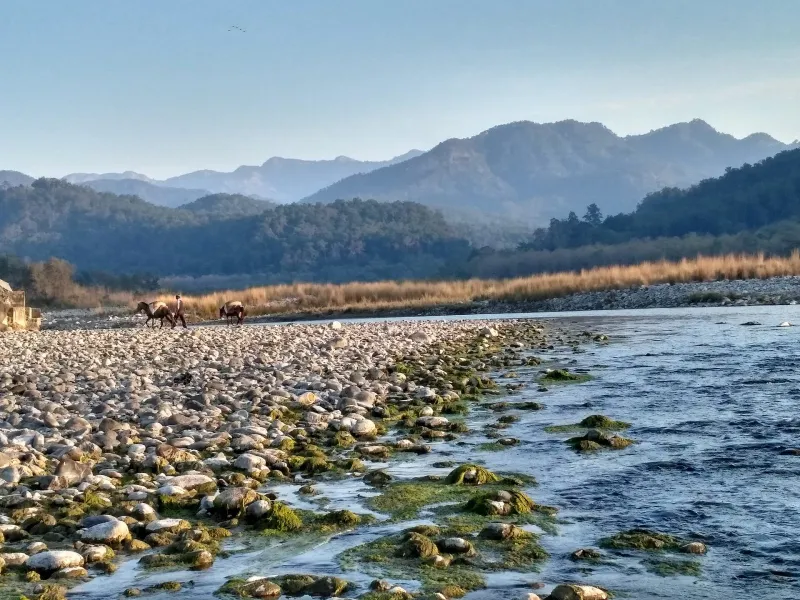
Kosi Riverside Retreat
Dhikuli, Ramnagar · Bijrani (6 km)
Private-pool cottages on the Kosi river with a naturalist-led evening talk and bonfire.
from
₹9,500/night
Safari zone
Open year-round, so the go-to zone for monsoon travellers. Known for sloth bear, elephants and tigers.
Entry through Dhela–Jhirna Gate. ~15–16 km from Ramnagar.
Jhirna is the zone that keeps Corbett open when most of the park shuts. It usually runs safaris all year, so if you are travelling between July and mid-October, Jhirna is likely to be one of your few options.
The zone lies on the southern edge of the reserve. It was added to the core area in 1994 after a village inside the forest was relocated, and the old farmland has since turned into grassland that draws deer and predators.
Jhirna is especially known for sloth bears, alongside elephants and tigers. Read on for the route, the wildlife, the best season and the permit details.
Jhirna feels drier and more open than Bijrani. The tracks run through mixed deciduous forest, scrub and patches of bamboo, with sal on the higher ground. Because the southern slopes are lower and more exposed, the zone has a slightly harsher, sunlit character, especially in summer.
The standout feature is the grassland left behind by the relocated village. Areas such as the Laldhang chaur now support herds of chital and are good places to scan for predators at the forest edge. Seasonal streams cross the route and fill quickly after rain.
Jhirna shares its entry area with the Dhela zone, about 15–16 km from Ramnagar, so the approach drive is short and easy.
Jhirna is one of the best places in Corbett to look for the sloth bear. Bears are most active early in the morning and in the late afternoon, often digging for termites or feeding on fruiting trees.
Tigers use the zone regularly, and you may also see elephant herds, especially after the rains. Sambar, chital, barking deer and wild boar are common. Leopards are present but seen less often.
Birdlife is varied thanks to the mix of scrub and grassland. Look for Indian peafowl, hornbills, rollers, bee-eaters and several species of eagle.
Jhirna is generally open year-round, although heavy rain can close tracks for a day or two at a time during the monsoon.
The morning shift is usually better for sloth bears. In summer, the afternoon shift can be hot but tends to reward patience near water points.
You enter from the Dhela–Jhirna gate area, roughly 15–16 km from Ramnagar. Around 30 jeeps are allowed per shift.
Online permits usually open 45 days ahead for Indian visitors and 90 days ahead for foreign nationals. During the monsoon months (roughly July to September), permits for Jhirna have often been issued at the counter in Ramnagar rather than online, so rules can differ from the peak season. Check the latest position in our permit booking rules, and see jeep costs in the safari price guide.
Carry the same original photo ID that was used for the permit. Only registered safari Gypsies with a guide may enter.
There is a small forest rest house at Jhirna, but like all rest houses in the reserve it follows the night-stay season (roughly mid-November to mid-June), not the zone’s year-round safari calendar. Details are in our forest rest houses guide.
Most visitors stay in Ramnagar or at lodges along the Dhela and Kyari roads, which keep the drive to the gate short. See our resorts and stays near the gates.
| Rest house | Rooms | Power | Food | Good to know |
|---|---|---|---|---|
| JhirnaJhirna Zone | A few rooms | Solar / generator | Kitchen: bring provisions | The only rest house in a year-round zone (the night-stay season still applies). |
Night stays run from 15 November to 15 June. How to book a forest rest house.
Dhikuli, Ramnagar · Bijrani (6 km)
Private-pool cottages on the Kosi river with a naturalist-led evening talk and bonfire.
from
₹9,500/night
Kyari Village · Jhirna (14 km)
Mud-and-stone cottages deep in the sal forest with solar power and farm-to-table meals.
from
₹4,200/night
Jhirna Zone is open year-round. Current status: open (Open all year (subject to weather)).
Jeep safaris are allowed. Entry is through Dhela–Jhirna Gate, Ramnagar.
A jeep for up to 6 adults and 2 children costs about ₹6,500 – ₹7,500 for Indians and ₹12,000 – ₹15,000 for foreign nationals per shift, including the permit, Gypsy and driver. The guide fee is paid at the gate.
Usually yes. Jhirna is one of the few Corbett zones that runs safaris all year, although individual days can be cancelled after heavy rain.
Its mix of scrub, bamboo and open grassland suits sloth bears, which feed on termites and fruit. Early mornings give you the best chance of seeing one.
Jhirna was added to the core of Corbett Tiger Reserve in 1994 after the village inside it was relocated. The former farmland is now grassland.
In the monsoon months, Jhirna permits have often been issued at the booking counter in Ramnagar instead of online. Check the current rule shortly before you travel.
The entry gate is about 15–16 km from Ramnagar, usually 30–40 minutes by road.