LuxuryRiverside
Kosi Riverside Retreat
Dhikuli, Ramnagar · Bijrani (6 km)
Private-pool cottages on the Kosi river with a naturalist-led evening talk and bonfire.
from
₹9,500/night
Safari zone
A newer zone near the Garjia Devi temple with good tiger and leopard movement.
Entry through Garjia Gate. ~12–14 km from Ramnagar.
Garjia is one of the newer jeep safari zones around Corbett, opened as demand for the core zones kept growing. It lies close to the famous Garjia Devi temple on the Kosi river, only a short drive from Ramnagar.
Garjia is a buffer zone managed under the Ramnagar Forest Division, not part of the Corbett Tiger Reserve core. That means a separate entry system, but the forest is continuous with the park and animals move freely between them.
It has built a good reputation for tiger and leopard movement and is a practical option when core zones are sold out.
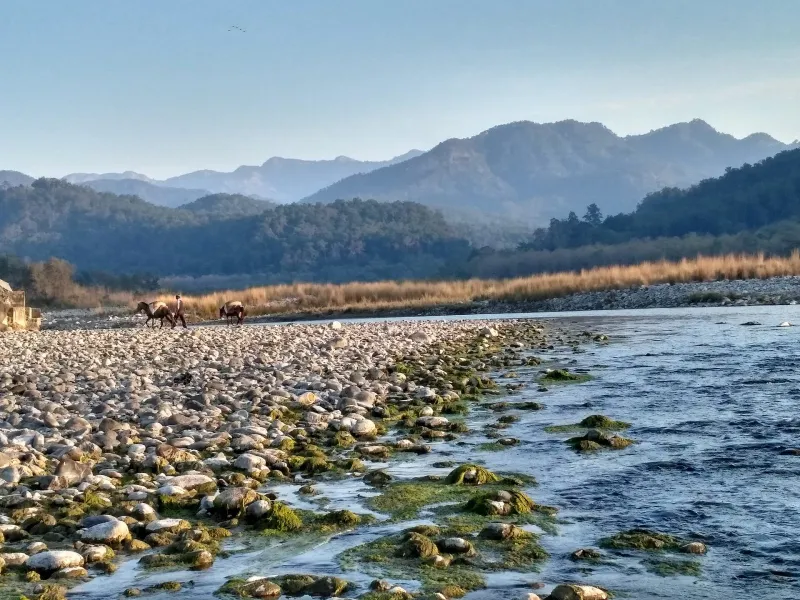
The zone covers forested hills and valleys on the eastern side of the Kosi, with sal on the slopes, mixed forest in the valleys and dry stream beds that animals use as trails. The terrain is gently hilly, giving you some elevated views over the forest.
Because it is a younger safari zone, the route is shorter and simpler than the big core circuits. That suits families and first-time visitors who want a relaxed drive without a long transfer.
The gate is roughly 12–14 km from Ramnagar, on the road past Garjia Devi temple.
The Garjia Devi temple stands on a large rock in the middle of the Kosi river and is one of the most visited shrines in the Ramnagar area. It draws big crowds on Kartik Purnima, usually in November, when a fair is held. If you are on an afternoon safari, you can visit the temple in the morning and then head to the gate; on festival days, allow extra time for traffic.
Garjia has seen regular tiger movement since it opened, and leopards are seen relatively often compared with some core zones, as they favour the rocky, hilly terrain.
You will usually see chital, sambar, barking deer, wild boar and langurs. Elephants pass through seasonally. The mix of forest and river edge also makes it a decent zone for birds such as hornbills, woodpeckers and kingfishers.
As with any zone, sightings vary from day to day; a quiet, patient drive gives you the best chance.
Garjia usually runs safaris from about 15 October to 30 June and closes during the monsoon.
The morning shift is the most active for predators. The afternoon shift works well if you want to visit Garjia Devi temple in the morning.
You enter through Garjia gate, about 12–14 km from Ramnagar. As a buffer zone of the Ramnagar Forest Division, Garjia has its own permit process, separate from the Corbett Tiger Reserve core-zone bookings, and only a limited number of jeeps are allowed per shift.
Booking rules for buffer zones can change more often than for core zones, so confirm the current process before you travel. Our permit booking rules page explains how core-zone permits work (usually 45 days ahead for Indian visitors and 90 days for foreign nationals), and the safari price guide shows typical jeep costs.
There are no forest rest houses for tourists in Garjia. The upside is that the Garjia and Dhikuli belt along the Kosi has many of the area’s best riverside resorts, some within a couple of kilometres of the gate.
Browse our resorts and stays near the gates.
Dhikuli, Ramnagar · Bijrani (6 km)
Private-pool cottages on the Kosi river with a naturalist-led evening talk and bonfire.
from
₹9,500/night
Kyari Village · Jhirna (14 km)
Mud-and-stone cottages deep in the sal forest with solar power and farm-to-table meals.
from
₹4,200/night
Garjia Zone is open from 15 October to 30 June. Current status: open (Season: 15 Oct – 30 Jun).
Jeep safaris are allowed. Entry is through Garjia Gate.
A jeep for up to 6 adults and 2 children costs about ₹6,500 – ₹7,500 for Indians and ₹12,000 – ₹15,000 for foreign nationals per shift, including the permit, Gypsy and driver. The guide fee is paid at the gate.
Garjia is a buffer zone managed by the Ramnagar Forest Division rather than part of the tiger reserve core. The forest is continuous, so the same animals move through it.
Yes. Garjia has had regular tiger movement since it opened, and leopards are seen fairly often too, though no sighting is guaranteed.
About 12–14 km, on the road past Garjia Devi temple. The drive usually takes 20–30 minutes.
Usually not. Garjia typically runs from mid-October to the end of June and closes for the monsoon.