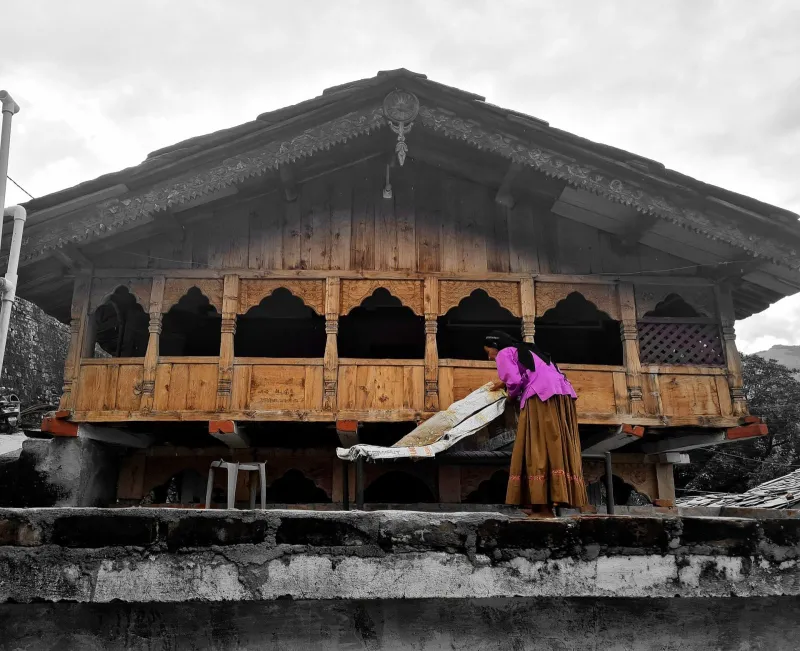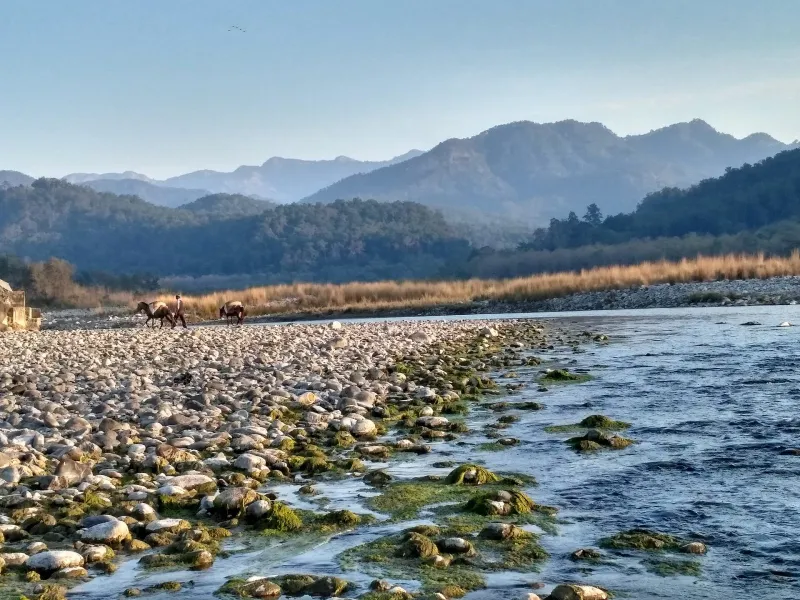
LuxuryRiverside
Kosi Riverside Retreat
Dhikuli, Ramnagar · Bijrani (6 km)
Private-pool cottages on the Kosi river with a naturalist-led evening talk and bonfire.
from
₹9,500/night
Safari zone
Grassland meadows and sal forest just 1 km from Ramnagar — one of the best zones for tiger sightings on a day safari.
Entry through Amdanda Gate. Amdanda gate ~1–2 km from Ramnagar; Bijrani FRH ~11 km.
Bijrani is the zone most first-time visitors book, and for good reason. Its entry point, Amdanda gate, sits on the edge of Ramnagar town, so you spend your safari time in the forest rather than on the road.
Inside, dense sal forest opens into wide grassy meadows where deer graze in the open and tigers often patrol the tracks. The zone is part of the core of Corbett Tiger Reserve and has a reputation for some of the most regular tiger sightings on a day safari.
This guide covers the landscape, the animals you are likely to see, the right season and shift, how permits work and where to stay nearby.
Once you pass Amdanda gate, the track climbs gently through tall sal forest broken by dry stream beds (locally called sots). These sandy channels are worth watching closely: tigers and leopards use them as easy walkways, and fresh pugmarks are common in the mornings.
Deeper in, the forest gives way to open grassland around the Bijrani rest house. These meadows, one of the park’s well-known chaurs, are where you usually see big herds of chital and where elephants come out to feed in the evening. Mixed patches of haldu, rohini and bamboo add variety along the way.
Your driver follows a set circuit decided by the forest department, and routes can be closed at short notice for animal movement or maintenance. The Bijrani rest house is roughly 11 km from Ramnagar, so a shift gives you a good loop without long transfers.
Bijrani’s mix of forest cover and open ground makes it one of the better zones for the Bengal tiger. Sightings are never guaranteed, but the grassland edges and stream beds give you a real chance, especially in the hotter months when animals move to water.
Asian elephants are frequent visitors, and you will almost certainly see spotted deer, sambar and barking deer. Wild boar, rhesus macaques and grey langurs are common along the tracks. Leopards are shyer here because of tiger presence but do turn up.
For birders, the zone is rich in woodpeckers, drongos, parakeets and raptors such as the crested serpent eagle. Watch for the red junglefowl, the wild ancestor of the domestic chicken, crossing the track.
Bijrani is usually open for day safaris from about 15 October to 30 June and closes during the monsoon, when heavy rain makes the tracks unsafe.
Morning shifts are cooler and give you the first look at overnight pugmarks. Afternoon shifts in April–June often produce sightings near water holes as the day cools. If you can, book one of each.
Your jeep enters through Amdanda gate, only about 1–2 km from Ramnagar, so most hotels are a short drive away. The zone allows roughly 30 jeeps per shift, and demand is high on weekends, long weekends and school holidays.
Online permits usually open 45 days ahead for Indian visitors and 90 days ahead for foreign nationals. Each permit carries the ID details of every passenger, so carry the same original photo ID to the gate. Read our permit booking rules before you book, and check current jeep costs in the safari price guide.
Only registered safari Gypsies with a forest-approved guide may enter. Private cars are not allowed inside.
Inside the zone there are two forest rest houses, Bijrani and the more remote Malani. Guests staying overnight at Bijrani can sometimes take an elephant ride in the grasslands, subject to availability. See our forest rest houses guide for rules and booking.
Most visitors stay in Ramnagar or along the Dhikuli road beside the Kosi river, which keeps the morning drive to Amdanda gate short. Browse our resorts and stays near the gates.
| Rest house | Rooms | Power | Food | Good to know |
|---|---|---|---|---|
| BijraniBijrani Zone | Rooms + small dormitory | Solar / generator | Kitchen: bring provisions | Set in the Bijrani grasslands; easy to reach from Ramnagar. |
| MalaniBijrani Zone | A few rooms | Solar / generator | Kitchen: bring provisions | Remote rest house about 12 km north-west of Bijrani. |
Night stays run from 15 November to 15 June. How to book a forest rest house.
Dhikuli, Ramnagar · Bijrani (6 km)
Private-pool cottages on the Kosi river with a naturalist-led evening talk and bonfire.
from
₹9,500/night
Kyari Village · Jhirna (14 km)
Mud-and-stone cottages deep in the sal forest with solar power and farm-to-table meals.
from
₹4,200/night
Bijrani Zone is open from 15 October to 30 June. Current status: open (Season: 15 Oct – 30 Jun).
Jeep safaris are allowed. Entry is through Amdanda Gate, Ramnagar.
A jeep for up to 6 adults and 2 children costs about ₹6,500 – ₹7,500 for Indians and ₹12,000 – ₹15,000 for foreign nationals per shift, including the permit, Gypsy and driver. The guide fee is paid at the gate.
Yes. Bijrani is known for fairly regular tiger sightings thanks to its mix of sal forest and open grassland, though no zone can guarantee one. Your chances are usually best from March to June.
Amdanda gate, the entry point for Bijrani, is only about 1–2 km from Ramnagar town. The Bijrani rest house is roughly 11 km from Ramnagar.
No. Bijrani usually closes for the monsoon and reopens around mid-October. For a monsoon safari, look at Jhirna, Dhela or the Sitabani buffer.
Elephant rides inside the core zone are generally offered only to guests staying at the Bijrani forest rest house, and they depend on availability on the day.
Roughly 30 jeeps are allowed per shift. This limit is why permits for weekends and holidays sell out quickly.