LuxuryRiverside
Kosi Riverside Retreat
Dhikuli, Ramnagar · Bijrani (6 km)
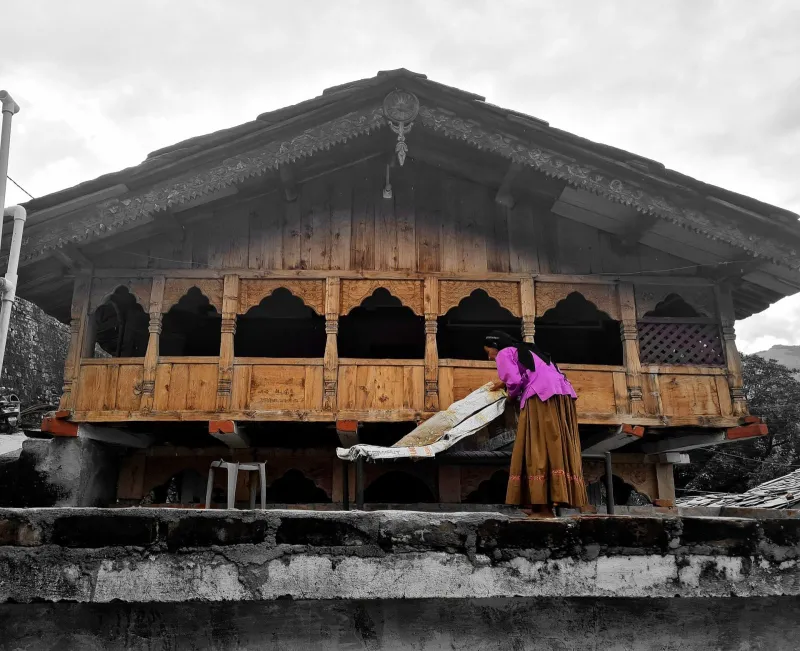
Private-pool cottages on the Kosi river with a naturalist-led evening talk and bonfire.
from
₹9,500/night
Safari zone
Hilly terrain along the Ramganga and Mandal rivers, a favourite for birders and mahseer spotting.
Entry through Durga Devi Gate. ~26–28 km from Ramnagar (via Marchula).
Durga Devi is Corbett’s hill zone. It lies on the north-eastern edge of the reserve, where the Mandal and Ramganga rivers cut through steep, forested slopes.
The drive feels very different from the grasslands of Bijrani or Dhikala: narrow tracks, river views and sudden changes in height. It is a favourite with birdwatchers and anyone who enjoys scenery as much as big mammals.
This guide explains what the zone looks like, which animals and birds to look for, when to go and how to book.
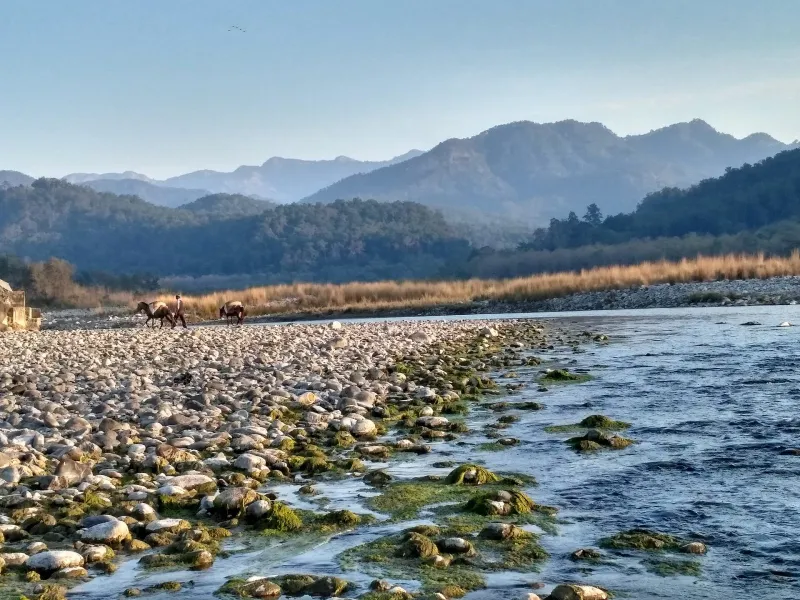
The route follows the valleys of the Mandal and Ramganga rivers, climbing and dropping through sal, mixed broadleaf forest and rocky ridges. Clear pools and rapids along the rivers are one of the zone’s highlights.
The terrain is hillier and more rugged than other zones, so the jeep moves more slowly and you get time to look around. Views open up across the valleys at several points, and the forest is noticeably cooler in the mornings.
The gate is roughly 26–28 km from Ramnagar via Marchula, a scenic drive along the Ramganga.
Think of Durga Devi as a slower, more contemplative safari. You will cover less ground than in Bijrani, but you will spend more time watching river bends, cliff faces and treetops, which is exactly where this zone’s special birds and animals are found.
Birding is the main reason people come here. The zone is known for hill and river species that are harder to find elsewhere in Corbett, including the long-tailed broadbill, forktails, kingfishers and the ibisbill on the riverbeds. In winter, the wallcreeper, a small grey-and-crimson bird of rocky cliffs, is a much sought-after sighting.
The rivers hold golden mahseer, a large game fish you can often see from the bank in clear water, and otters are seen along quieter stretches.
Mammals include elephants, leopards, sambar, barking deer, goral on the steeper slopes and occasionally tigers. The Himalayan black bear has also been recorded in the higher forest.
Durga Devi is usually open from about 15 November to 15 June and closes for the monsoon, when rivers rise and hill tracks become unsafe.
For birding, the morning shift is clearly better. The afternoon shift offers softer light for photographing the river valleys.
You enter through Durga Devi gate, about 26–28 km from Ramnagar, reached via Marchula. The quota is small, roughly 11 jeeps per shift, so the zone rarely feels busy.
Online permits usually open 45 days ahead for Indian visitors and 90 days ahead for foreign nationals. Allow extra time for the drive from Ramnagar in the early morning. Read our permit booking rules and check jeep costs in the safari price guide.
Inside the zone there are two forest rest houses: Lohachaur, on a hill above the Mandal river, and Rathuadhab, beside the river. Both are simple and follow the reserve’s night-stay rules. See our forest rest houses guide for details.
Outside, homestays and riverside lodges around Marchula keep you close to the gate and away from the busier Ramnagar belt. Browse our resorts and stays near the gates.
| Rest house | Rooms | Power | Food | Good to know |
|---|---|---|---|---|
| LohachaurDurga Devi Zone | A few rooms | Solar / generator | Kitchen: bring provisions | Hill-top rest house above the Mandal river. |
| RathuadhabDurga Devi Zone | A few rooms | Solar / generator | Kitchen: bring provisions | Riverside rest house on the Durga Devi side. |
Night stays run from 15 November to 15 June. How to book a forest rest house.
Dhikuli, Ramnagar · Bijrani (6 km)
Private-pool cottages on the Kosi river with a naturalist-led evening talk and bonfire.
from
₹9,500/night
Kyari Village · Jhirna (14 km)
Mud-and-stone cottages deep in the sal forest with solar power and farm-to-table meals.
from
₹4,200/night
Durga Devi Zone is open from 15 November to 15 June. Current status: closed (Reopens 15 Nov (monsoon closure)).
Jeep safaris are allowed. Entry is through Durga Devi Gate.
A jeep for up to 6 adults and 2 children costs about ₹6,500 – ₹7,500 for Indians and ₹12,000 – ₹15,000 for foreign nationals per shift, including the permit, Gypsy and driver. The guide fee is paid at the gate.
Yes, it is one of the best zones in Corbett for birds, especially hill and river species such as the long-tailed broadbill, forktails and, in winter, the wallcreeper.
Tigers are present but seen less often than in Bijrani or Dhikala. Durga Devi is better for scenery, birds, elephants and river life.
About 26–28 km, via Marchula. The drive usually takes around an hour.
The golden mahseer is a large river fish. In Durga Devi you can often spot it in clear pools of the Ramganga and Mandal rivers from the bank.
Yes. Lohachaur and Rathuadhab forest rest houses are in the zone and can be booked for night stays during the season.